Why Graphs Matter More Than Ever in a Data Driven World
Connecting school maths to real‑world literacy
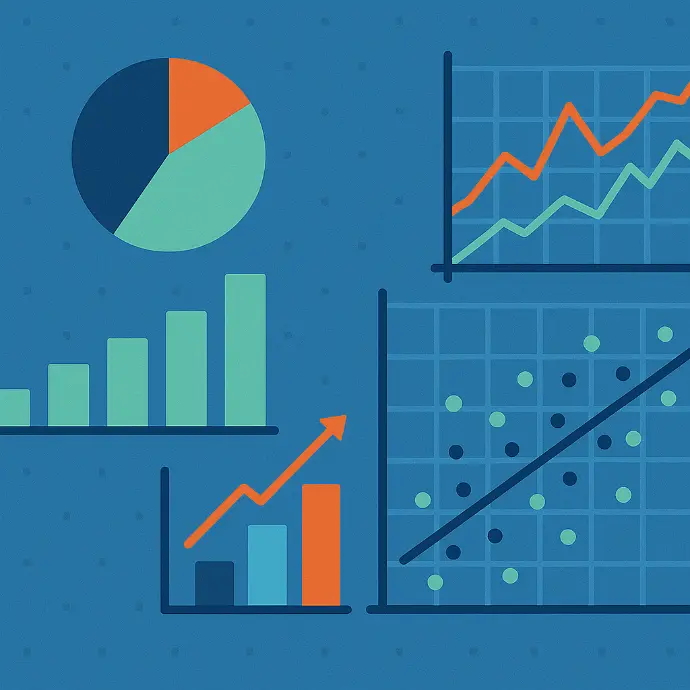
Open a news website, scroll through social media, or sit in a meeting at work - chances are you’ll see a graph within minutes. Lines climbing, bars comparing, dots clustering. We live in a world where information is increasingly visual, and graphs are the language of that world.
Yet many students still see graphs as “just another maths topic”. Something to get through, not something to use.
The truth is simple: Graphs are no longer optional. They’re a core part of being an informed, capable citizen.
Let’s explore why graph literacy matters more than ever - and how school maths helps students build this essential skill.
We Live in a World of Data - and Graphs Are Its Storytellers
Every day, we’re surrounded by data:
- climate trends
- interest rates
- population changes
- sports statistics
- health information
- business performance
- social media analytics
But raw numbers don’t tell a story. Graphs do.
A well‑designed graph can reveal patterns, highlight changes, and make complex ideas instantly understandable. Students who can read graphs fluently can understand the world more clearly - and question it more confidently.
Graphs Help Us Spot Patterns That Words Can’t Capture
Try explaining a trend over time using only text:
“It went up a bit, then down slightly, then up again, then sharply up…”
It’s clumsy and unclear.
A line graph shows the same information in a single glance.
Graphs turn:
- messy data → clear patterns
- long explanations → quick insights
- confusion → understanding
This is why scientists, journalists, economists, and businesses rely on graphs every day.
Graphs Build Critical Thinking - Not Just Maths Skills
Being able to read a graph isn’t just about maths. It’s about thinking critically.
Students learn to ask:
- What story is this graph telling?
- What story is it not telling?
- Is the scale fair?
- Is anything missing?
- What conclusions are reasonable — and what would be a stretch?
In a world where misinformation spreads quickly, graph literacy helps students become thoughtful, sceptical consumers of information.
Graphs Are Everywhere in the Workplace
Whether students go into trades, business, science, health, technology, or the arts, they will encounter graphs.
Examples include:
- sales trends
- project timelines
- performance dashboards
- budgeting and forecasting
- scientific results
- website analytics
- engineering measurements
Understanding graphs isn’t just a school skill - it’s a workplace skill.
Graphs Help Students Make Better Personal Decisions
Graphs show up in everyday life too:
- comparing mobile plans
- tracking fitness progress
- understanding mortgage rates
- reading election results
- interpreting weather forecasts
- analysing sports performance
Students who can read graphs make better decisions because they can see the bigger picture.
School Maths Builds the Foundations for Real‑World Graph Literacy
When students learn to:
- plot points
- interpret axes
- understand scales
- read trends
- compare relationships
- connect equations to graphs
…they’re not just learning a curriculum requirement. They’re learning a life skill.
NuLake’s step‑by‑step approach helps students build this fluency gradually - from simple coordinate grids to meaningful real‑world graphs that tell a story.
Graphs Empower Students to Communicate Clearly
Graphs aren’t just for reading - they’re for communicating.
A student who can turn data into a clear graph can:
- present ideas confidently
- support arguments with evidence
- explain patterns visually
- persuade an audience
In a world where communication is increasingly visual, this is a powerful skill.
Final Thoughts: Graphs Are a New Form of Literacy
Graphs are more than lines and bars. They’re a way of thinking.
A way of seeing the world. A way of communicating ideas. A way of making informed decisions.
When students learn to read and create graphs, they gain a form of literacy that will serve them for life — in school, at work, and in the world beyond.
And that's why graphs matter more now than ever.🌈✨